
NOTES ON KEYS HISTORY by Brad Bertelli
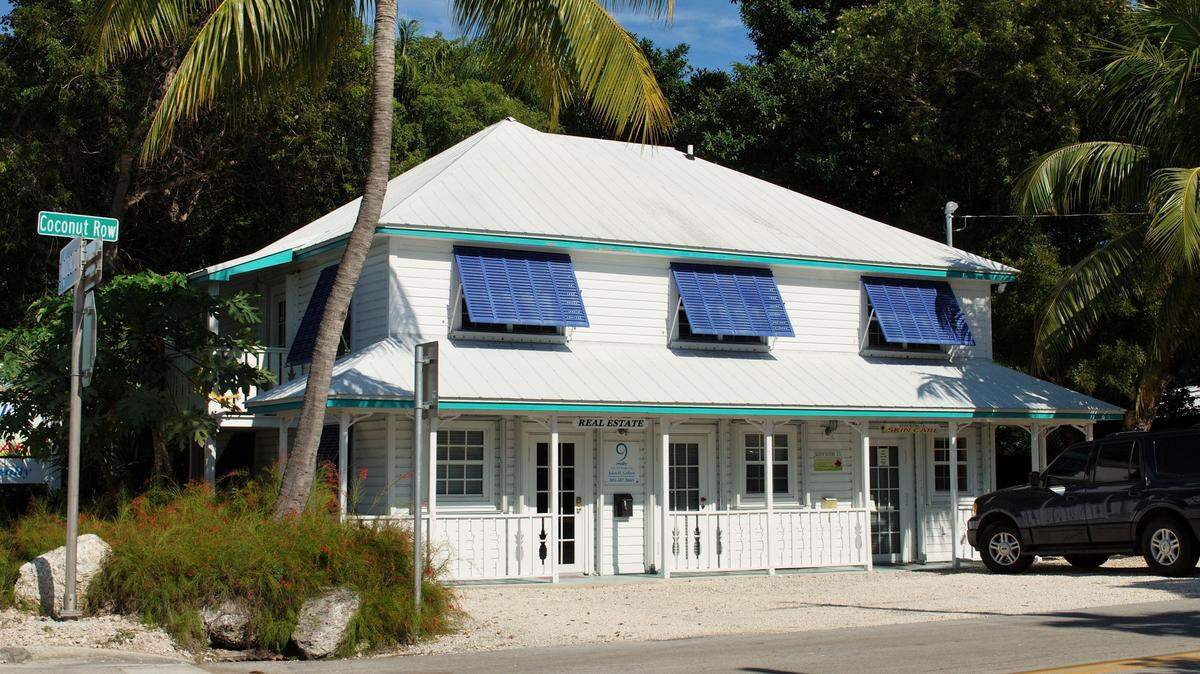
Because proteins were readily available in the warm clear waters surrounding the islands, available land was dedicated to farming what people lacked, namely fruits and vegetables. Pioneer families utilized family farms to produce not only for their own needs, but also to provide a little extra to trade with neighbors.
In addition to family farms, the Upper Keys supported a commercial farming industry that required packing houses to ready crops for shipping. Adolphus Pinder, the son of Indian Key’s Richard Pinder, even built a tomato cannery on Upper Matecumbe in the early 1890s. It operated for a couple of years before closing to be retrofitted to accommodate pineapple processing, but the plant never reopened.
One of the earliest commercial farmers in the Upper Keys was Captain Ben Baker, King of the Florida Wreckers. Because wrecking did not provide full-time work, most wreckers had side jobs like fishing or farming. Baker, who homesteaded 160 acres on Key Largo in the area of Mile Marker 97, farmed pineapples. Baker and his sons cleared the land by cutting down the trees and brush, stacking it in debris piles, and lighting it on fire. The ashes acted as a fertilizer to help vitalize the soil.
Captain Baker imported 6,000 pineapple slips, suckers cut from pineapple stalks, from Cuba to plant on his Key Largo property. Captain Baker, who also farmed pineapples on Plantation Key, established one of the first major pineapple farms on the Upper Keys. In fact, in a story that appeared in an 1871 edition of <i>Harper’s New Monthly Magazine<i>, Dr. J.B. Holder (who had toured the Keys years before) wrote, “Mr. Baker, the owner who resides in Key West, is reported to have realized seven thousand dollars this summer from his crop of pineapples.”
The captain was not the only one farming on the Upper Keys. Richard Pinder, the original Pinder, had a banana farm on Indian Key and pineapple farmer Samuel Johnson homesteaded land just south of Baker’s property. Pineapple farming became so popular that the community of Planter, named because of its roots as a planting community, developed around the farms of Johnson and his seven sons.
Pineapples were so prevalent on the Florida Keys that approximately 85 percent of the pineapples sold in America were grown here. This is not a precise figure. Rather, 85 percent is the number reached after two noted Florida Keys historians, Tom Hambright and Jerry Wilkinson, got together and applied pineapple math to the equation.
A peek into early farming practices on the islands was given in Andrew P. Canova’s 1885 piece, Life and Adventures in South Florida in which he stated, "On different portions of Upper Matecumbe, in May, 1880, were little patches of deep soil, called by the inhabitants 'Red Holes.' These curious spots are from 15 to 30 feet in diameter and take their name from the peculiar, reddish color of the soil contained in them. Scarcely any rocks are found in these spots, and the fruit growers select them on that account as a place to plant bananas and tropical fruit trees. . . . Messrs. Pinder and Saunders were raising pineapples and made immense shipments in 1881 and 1882. The manner of cultivation was peculiar. No hoe could be used because of the shallowness of the soil. The plants were set 18 inches apart, and left mostly to themselves. One weeding was considered sufficient. . . . On Plantation Key a Mr. Low [Lowe] had a pineapple and coconut grove. The pineapple grove was 30 acres in size and the crop that year [1880] was doing so well that he expected to cut at least 96,000 pineapples. . . ."
The Key West column of the December 27, 1884 Fort Myers Press revealed, "Many of the leading merchants own tracts of land on the Keys which are entirely devoted to the culture of pineapples, tomatoes, Irish potatoes, sweet potatoes, cabbage, cassava, tapias, beets, carrots, turnips, and various tropical fruits which flourish in abundance. The average shipments of pineapples alone will reach more than $200,000 per annum." On June 20, 1885 the paper again stated that, "The best melons for this season come from Key Largo."
A Florida East Coast Railway construction survey drawn in April 1905 shows Plantation Key with 3 tomato fields, 4 pineapple fields, 2 alligator pear (avocado) groves, 3 coconut groves, 1 lime grove, 2 sugar apple groves, 1 orange grove and 3 abandoned fields.
The Florida Times-Union newspaper of Nov. 28, 1917 stated in its column "Islamorada Notes" that "There are thirty families living on the island: tomatoes, onions and limes are the principal crops. There are 183 acres of lime groves and about 100 acres of tomatoes and onions planted this season. The farmers will commence shipping tomatoes about December and will continue shipping until April. The best tomatoes grown are grown in the Florida Keys."
Brad Bertelli is a published author of four books on Florida and Florida Keys history. He is the curator of the Keys History and Discovery Center, located at the Islander Resort. His column will appear every other week in The Reporter. Reach Brad with comments and questions at WhyPanic@aol.com.
This story was originally published November 13, 2014 at 6:58 PM with the headline "NOTES ON KEYS HISTORY by Brad Bertelli."