
Hurricane forecasts for your block. There's a website for that now
When a hurricane forms and begins to tumble landward, the one question anyone ever wants answered is: What's that mean for me, my family and my roof?
While not absolute — it's weather after all — super computers and super graphics now allow meteorologists to provide a reasonable answer.
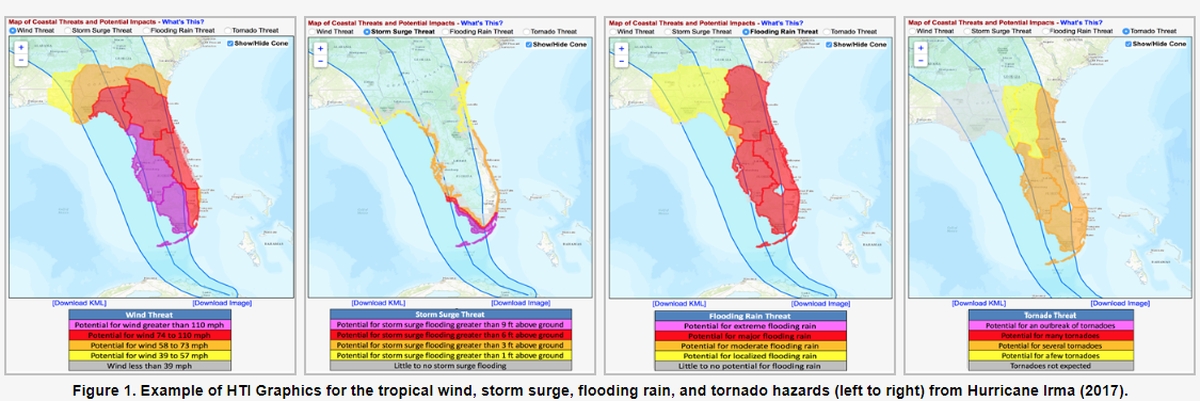
A web page created by the National Weather Service provides a look city by city and even block by block. Maps and other local forecast tools featured on the page fill in the blanks left by the popular 'cone of uncertainty' that has come to dominate forecasts. The cone uses past forecast accuracy to provide a hurricane's likely path, but not the brutal details.
"Once the storm gets basically within 24 hours of you, the cone really loses its original intent," said Robert Molleda, warning coordinator meteorologist for the National Weather Service's Miami office.
"It doesn’t directly address all these questions: What am I going to experience in my city? When are the conditions going to start to get bad? What actions do I need to take?"
While the National Hurricane Center has filled in some of those gaps by issuing maps that convey wind arrival times and storm surge predictions, the information is broad, like a view from space. Once watches and warnings go up, forecasters defer to local meteorologists.
In the past, those forecasts often came in dense text, full of meteorological terms and not always easily recognizable references based on a topography. The new web page, largely unnoticed during one of the Atlantic's busiest and costliest seasons on record, provides visuals for over-stimulated viewers and consolidates information in one easy stop. Maps that become active once an area comes under a watch or warning depict a reasonable worst case scenario, and accompanying text describing what's likely to happen. The maps get updated every six hours with the latest information from the hurricane center.
"The purpose of this is to really go beyond the cone to get down to what we need to be prepared for from a threat and impact perspective," Molleda said. "This is a one-stop page where people can access the information in one general setting."
The maps look at the four major threats — winds, flooding from storm surge or rainfall, and tornadoes — and allow users to zoom in and out, with frightening specificity. They don't convey absolute risk, just a reasonable worst case scenario.
"It leans toward the worst case, but not all the way," he said. "It’s a reasonable worst case."
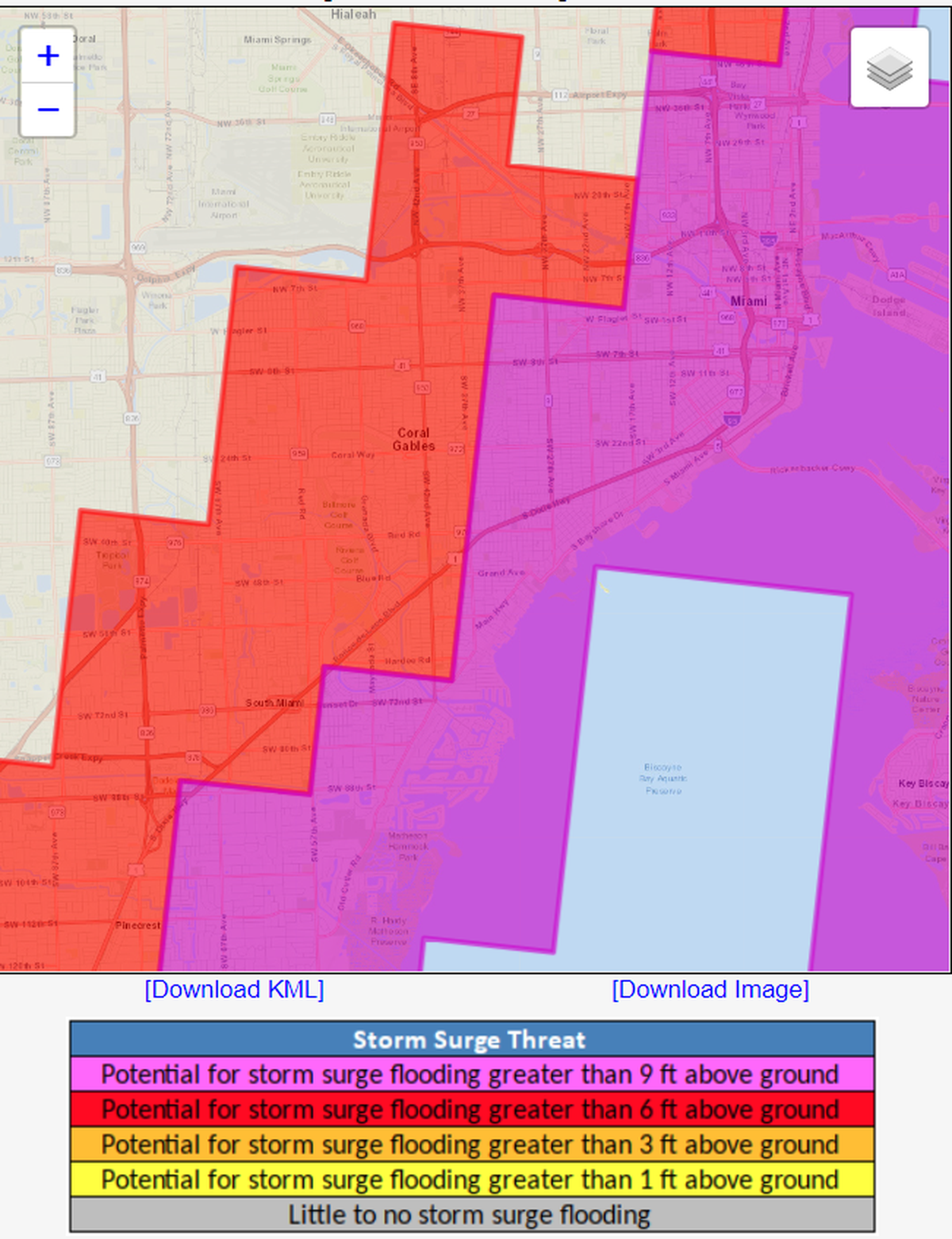
As the storm nears and meteorologists' confidence in forecasts increases, those odds increase so the maps narrow boundaries, similar to the shrinking cone along a storm's track.
To better understand the differences, consider Irma. Two days before the storm struck the Lower Keys, nearly every corner of the state, minus the Panhandle, fell under the cone. Hurricane center maps predicting possible arrival times for tropical storm force winds stretched from the Bahamas to the eastern Gulf of Mexico. A probability map accurately depicted the shrinking risk of hurricane force winds in Miami, but painted boundaries with a broad stroke.
The cone is also computer generated, so forecasters can't modify it in any way.
Local forecasts, by contrast, are "human generated," Molleda said. "In other words the scripts we run take into account all we’re talking about and then we make adjustments."
As Irma neared, local weather office maps narrowed the boundaries for stronger winds and shrunk storm surges in an attempt to show residents the receding threat.
"We recognize that the average forecast error at 36 hours … is anywhere between 30 and 50 miles, which may not seem like a big deal but it's the difference between downtown Miami or Boca Raton," Molleda said.
While they're both intended to be used for planning, the local forecasts kick in at crunch time.
"That’s the purpose of this, to really go beyond the cone," he said. "The hurricane center forecast is the official track and intensity forecast, so it’s the big picture. … But if you live in say, Miami, and want to know what does this mean for me? That’s when you go to the local forecast products that take the hurricane information and give it much more local detail."
This story was originally published June 22, 2018 at 5:38 PM with the headline "Hurricane forecasts for your block. There's a website for that now."