
Captain Housman v. the people of Key West
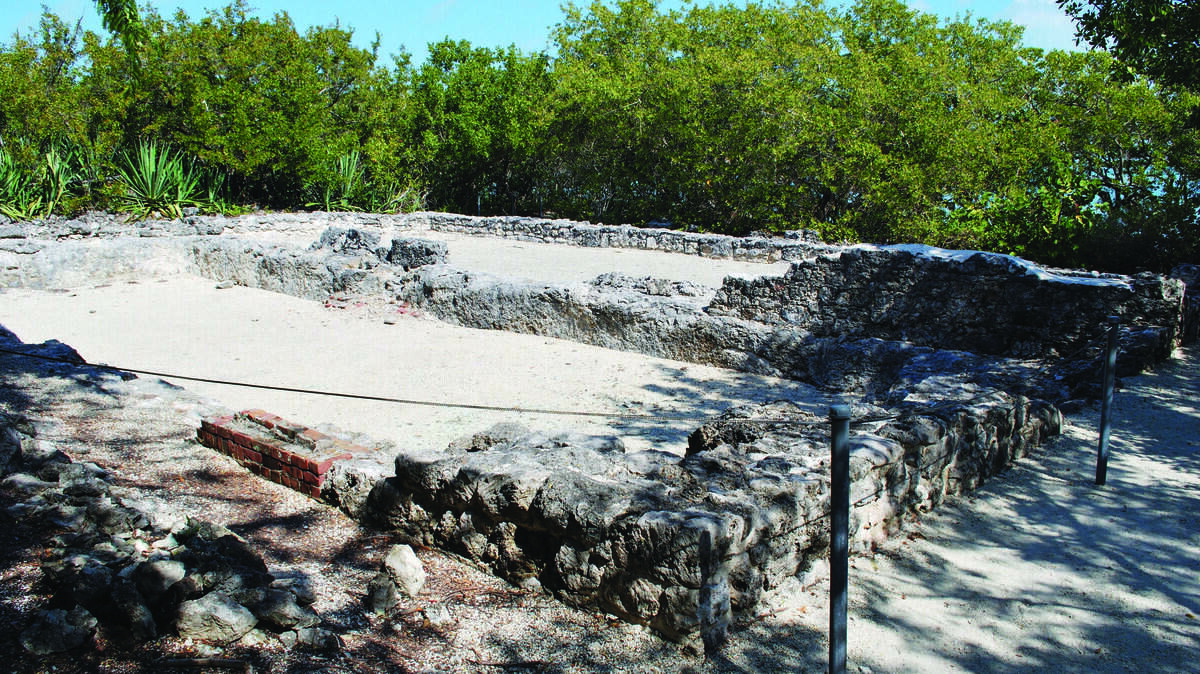
Captain John Jacob Housman’s story altered the history of not only the Florida Keys, but Monroe County.
Monroe County, by the way, originally stretched all the way to Lake Okeechobee. Housman was born in 1799, on Staten Island, New York and sailed for the West Indies as a young man. After an unfortunate encounter with the Florida Reef and subsequent introduction to Key West, Housman established a successful wrecking business that primarily operated out of the Florida Territory’s southernmost port.
What history makes clear is that Captain Housman and the wrecking community of Key West did not get along. The reason why is unclear, though it can practically be assumed that it had something to do with the fact that not only was he an outsider, but an independent thinker. Judging by the events of September 1825, animosities between the two had already been fermenting for a period of time.
In the early days of September, Housman had been sailing his wrecking schooner William Henry along the Florida Reef when he spied a vessel in distress approximately three miles east of Caesars Creek (north of Key Largo). The ship was a French brigantine, a two-masted square-rigged vessel.
Upon closer inspection the ship’s name was revealed to be Revenge. She was abandoned and bilging. Housman ordered his crew to work and the reported salvage was, “eight Ceroons of cochineal, two boxes of Sugar, and a quantity of Logwood unknown, but supposed to be twelve tons, and a parcel of sails and rigging.”
When the salvage operations were complete, Captain Housman ordered the ship to take a northerly heading. When word reached Key West, and it did not take long, people who knew Housman were convinced he was taking the salvaged items to Charleston, South Carolina. The laws governing the Florida Territory stipulated that all items salvaged in territorial waters were to be taken to ports at either St. Augustine or Key West where salvage claims would be adjudicated by a five-man jury.
When the William Henry arrived in St. Augustine, Housman discovered that Key West resident Fielding A. Browne had charged he had “defied the civil and military authorities of this place to proceed to Charleston to dispose of his cargo.” Browne went so far with his charge of theft that he compelled Captain Brown of the U.S. revenue cutter Florida to chase down Housman and place him under arrest.
As a side note, Fielding A. Browne would go on to become Key West’s second mayor.
Housman responded to Browne’s statements by threatening to, “take another occasion to lay before the public, a history of the impartial and disinterested conduct of the gentlemen of many avocations at Key West, in their disposal of property falling under their control, and it will then be fairly understood whether there was more wisdom or folly in my giving preference to a decision at St. Augustine over one at Key West.”
Captain Housman would have been aware of the wrecking practices of Key West where he had based his wrecking operation for a handful of years. He would have also had ample opportunity to observe the inner-workings of the Key West wrecking industry. During his time sailing up and down the reef, Housman also watched the island of Indian Key develop into a small community.
What Indian Key revealed to Housman was opportunity, an opportunity he seized with gusto. The captain understood there was more to the business of wrecking than salvage fees accrued from work performed out on the reef. Wrecking was also about services rendered back at the dock. Workers involved with the loading and unloading of goods that came into port had to be paid, as well as the shipwrights and blacksmiths in charge of boat repairs. There were also warehouse fees associated with the storage of salvaged goods.
Housman moved to Indian Key in 1830 and fostered the growth of the island until it developed into his own private wrecking paradise complete with docks, shipwrights and a warehouse. There was even a hotel on the island with a saloon, billiards table and nine-pin bowling alley. Indian Key began to compete with Key West. Housman lobbied over and over for the legislature to sever Indian Key from Key West’s politics.
Ultimately, at least for a few short years, the feat was accomplished. Housman’s winning argument to the Florida Legislature was that serving jury duty in Key West proved unfairly inconvenient for the northern residents of Monroe County forced to travel to the southernmost city. The result was the creation of Dade County in 1836. Indian Key was named the county seat. The announcement blindsided Key West officials and further manipulated the thorn in their sides that was Captain John Jacob Housman.
Brad Bertelli is a published author of four books on Florida and Florida Keys history. He is the curator of the Keys History and Discovery Center, located at the Islander Resort. His column will appear every other week in The Reporter. Reach Brad with comments and questions at WhyPanic@aol.com.
This story was originally published March 20, 2015 at 1:21 PM with the headline "Captain Housman v. the people of Key West."