Inspection finds ‘very thin dolphins’ at Seaquarium. New management defends care
Nine dolphins at Miami Seaquarium were underfed as a form of punishment, causing unhealthy weight loss and dangerous aggressive behavior, according to a critical inspection by the federal agency that oversees animal attractions.
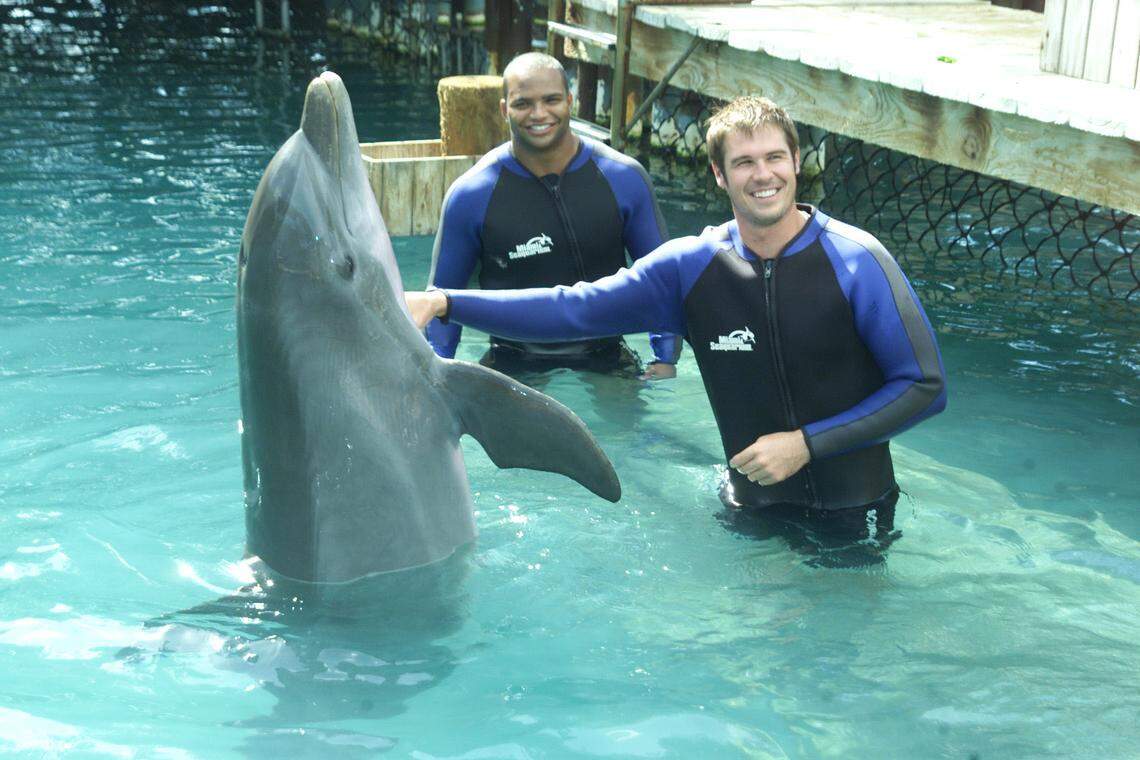
Friday’s report marked the second time in 13 months that U.S. Department of Agriculture inspectors gave a negative assessment of treatment of animals at the marine park in Virginia Key.
Lolita the killer whale, Seaquarium’s star attraction for 50 years, was one of the subjects of the USDA’s 2021 report, which also cited inadequate nutrition for animals as well as poor water quality and maintenance and ordered Lolita’s cramped tank closed for repairs. Lolita, also known as Tokitae or Toki, was retired from performing in March when The Dolphin Company replaced Festival Fun Parks as operator of the lease from Miami-Dade County, prompting optimistic predictions from county leaders that Seaquarium would become more conservation-oriented and less focused on entertainment.
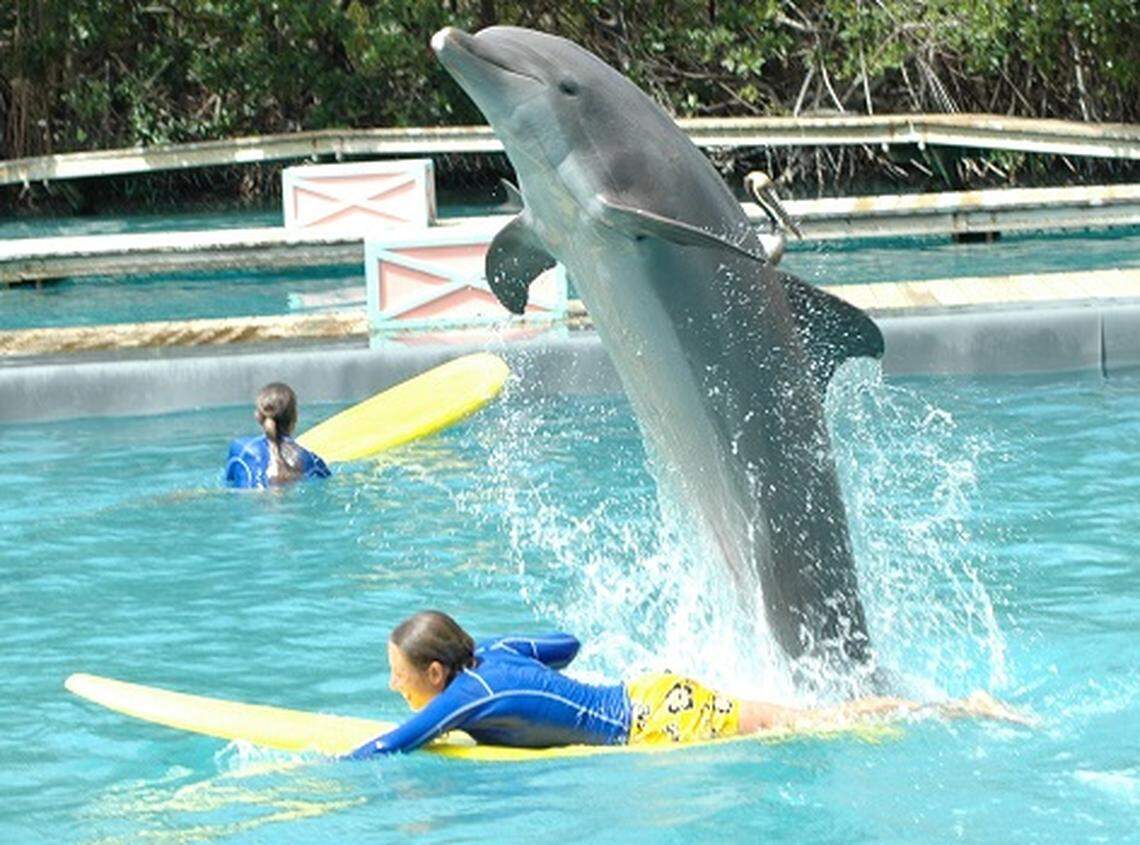
But the latest report from a July 6 inspection states that dolphins’ diets were cut by as much as 60 percent starting in March and April to induce them to perform better during interactive sessions at Dolphin Harbor, where a 30-minute “Dolphin Encounter” costs $159 for guests age 10 and over, including admission.
“Depriving these dolphins of their full dietary and nutrition requirements to ensure compliance during public encounters directly affected their health and well-being,” according to the report, which gave detailed anatomical descriptions of ‘very thin dolphins’ with protruding ribs and lean necks. “Deprivation of food or water shall not be used to train, work or otherwise handle animals. Correct from this day forward.”
Seaquarium General Manager Patrick Pearson, who started his job in April, contested some of the report’s findings, which also cited a lack of communication between Attending Veterinarian Shelby Loos and staff on the condition of animals.
“I would not agree with the characterization of underfed,” Pearson said. “The dolphins’ diets were modified for important reasons. We acquired the property in March and our team determined we had nine overweight dolphins. We would never cut a diet to induce behavior.
“As far as the nutrition and poor communication issues, we took corrective action even before the USDA got a tip and showed up.”
Incidents of aggressive behavior such as “mouthing” or biting increased after the diet cuts, the report found.
“The food deprivation these dolphins were subjected to also led to increased incidents of unwanted behaviors such as splitting or breaking from sessions, swimming over ledges where guests may stand, sinking during lineups and aggressing against trainers,“ the report said.
Read More: Shows are over for Seaquarium’s killer whale Lolita, new managers say. 50-year era ends
Calypso, an 8-year-old female who had daily rations reduced from 15 pounds of fish to 9, averaged 18 incidents of “unwanted behavior” in January and February, but “after the transition [to a new operator], Calypso’s unwanted behaviors drastically increased to 38 separate incidents in April,” according to the report.
Cobalt, a 12-year-old, 615-pound male whose diet was cut from 18 to 5 pounds and who lost 104 pounds over four months, had no aggressive incidents recorded on his training charts in January and February. But once his food intake was reduced, “inappropriate behaviors steadily increased.” He bit trainers, pestered Star, a female dolphin, and “routinely split from sessions and began swimming over to guests during an encounter.”
The number of guest interactions per session have also increased, forcing the dolphins to perform longer. The report said Aries, a 375-pound male who lost 63 pounds after his diet was cut from 13 pounds to three, interacted with 67 guests on one day.
Jenna Wallace is a former staff veterinarian at Seaquarium who left after cooperating with the first inspection in 2021. She has been a key whistle-blower witness for an investigation of Seaquarium being conducted by the USDA’s enforcement division. She called the latest report “disturbing.”
“A hungry animal works harder, that’s the thinking,” Wallace said. “You increase the number of guests, you’re asking the dolphin to flap his pectoral fin — hi! — to 60 people, to put his head out and give kisses to more people, to have more people grab onto his pecs and swim. They’re hungrier, yet they’re being fed less food, and that makes anybody angry.”
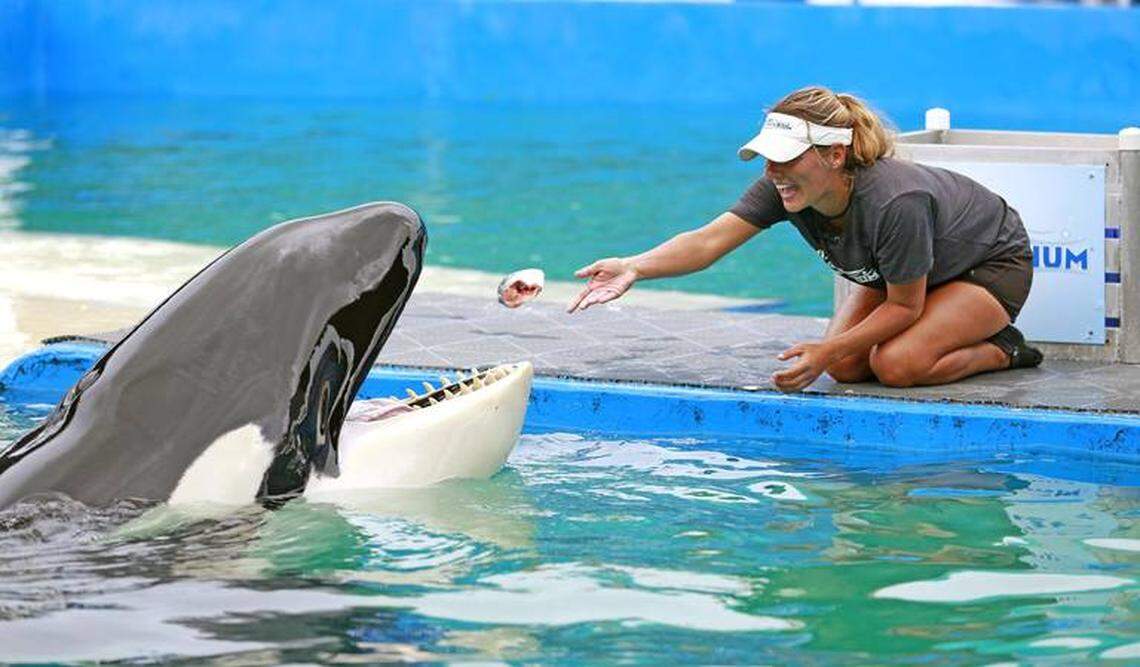
When Toki’s diet was cut last year, the whale began acting more aggressively and staff believes she accidentally killed Catalina, the Pacific white-sided dolphin that lived in the same tank, by ramming her.
“The trend started when Toki’s diet was the first to be cut because our curator said ‘They’re feeding Toki like a stuffed pig,’ ” Wallace said. “You have a killer whale in a bathtub and she’s hungry, dehydrated and confused, what do you expect?”
The USDA report noted other incidents, including a training session when a dolphin named Cayman rammed a trainer in the stomach and three other trainers tried ordering the dolphin to stop but “Cayman ignored the recalls and mouthed the trainer several times while they swam to the stairs” and Cayman attempted to ram a trainer again.
In Dolphin Harbor, dolphins showed warning signs before biting guests “but staff elected to continue guest interactions anyway. The facility failed to handle their animals in a manner that minimized the risk of harm to the public.”
Seaquarium, which opened in 1955, has long been the target of animal activists who call it an “abusement park” and argue that Toki’s small tank has caused physical and psychological trauma.
“The new report confirms that animals continue to suffer terribly at Seaquarium, in violation of the Animal Welfare Act and the lease with the county,” said Jared Goodman, general counsel for animal law for People for the Ethical Treatment of Animals (PETA). “The Dolphin Company was touted as a savior and we see they can’t even do the bare minimum for the animals. They need to shut Seaquarium down.”
Miami-Dade County Mayor Daniella Levine Cava said she was “deeply disturbed by the findings of the USDA report.” Seaquarium sits on land leased by the county.
“Under the terms of the lease The Dolphin Company is obligated to comply with federal regulations including the Marine Mammal Protection Act and Animal Welfare Act, and we will be swiftly reviewing the report to determine whether The Dolphin Company is in violation of the lease,” she said.
Pearson defended changes made at Seaquarium, including computerized monitoring of water quality and feeding volume and “procedures we have expertise in around the world running dolphin operations and aquariums with the highest standards.”
He said that although concerns about Toki’s health persist, she is thriving.
“Three weeks ago she was very sick and our team developed a treatment plan,” he said. “Today she’s eating well and is very playful. I spent an hour with her and can say she is doing great.”
This story was originally published October 21, 2022 at 7:22 PM with the headline "Inspection finds ‘very thin dolphins’ at Seaquarium. New management defends care."