
Former FDOT chief argues for Cubans to stay. Abreu cites 2006 Old Seven Mile Bridge case
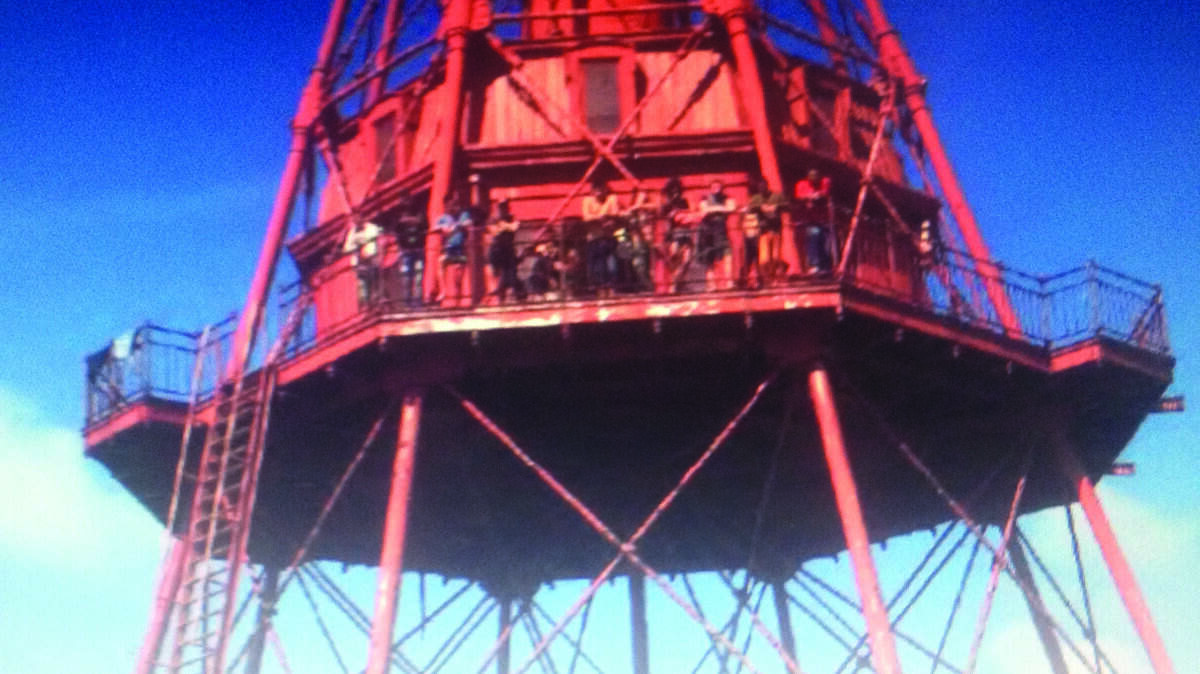
A former secretary of the Florida Department of Transportation argued in a statement filed in federal court this week that the reef situated 4 feet below the bottom of a lighthouse that was the scene of a May 20 standoff between the U.S. Coast Guard and 19 Cubans is part of the United States and Florida.
Jose Abreu, who headed FDOT from 2003 to 2005 under then-Gov. Jeb Bush, said the roughly 4 acres of sea bottom surrounding American Shoal Light off the Lower Keys has been part of Florida since it became a state in 1845.
"The location of the lighthouse is well within the boundaries of the Florida Outer Continental Shelf," Abreu stated in a declaration filed June 1. "The Shelf is defined in terms of depth between 20 and 180 meters. The depth at this location is less than 10 meters."
Abreu's statement was filed in support of Movimiento Democracia, a nonprofit legal group fighting the Department of Homeland Security in federal court for the right of 24 Cubans found off Sugarloaf Key on May 20 to stay in the country. Nineteen of the migrants climbed the 109-foot-tall American Shoal Light and did not come down for hours. Three men in the group never did come down and weren't found until the next day. Two of the men were captured by the Coast Guard immediately after being confronted and jumping off the group's makeshift vessel the morning of May 20.
The Coast Guard and Department of Homeland Security quickly determined the lighthouse does not qualify as dry land under the 1995 wet-foot, dry-foot change to the Cuban Adjustment Act, and the migrants should be immediately repatriated.
Movimiento Democracia, or Democracy Movement, filed an injunction in U.S. District Court on May 24 arguing the lighthouse is on U.S. territory and the 22 men and two women should be allowed to stay.
Abreu said "structures erected on a parcel or track of land automatically assume the jurisdiction of the land itself unless otherwise specified even when the land is submerged."
"This is the same rationale used in the 2006 case that involved the Seven Mile Bridge," he stated.
In that case, 15 migrants landed on a piling of the old Seven Mile Bridge, next to the functioning bridge, in 2006. Homeland Security determined the old span, which has sections missing, is no longer connected to dry land and ordered the Cubans to go home.
But a federal judge later that year determined the historic bridge is still part of the United States and dry land, and several of the repatriated migrants have since returned to the states.
Abreu is now senior vice president and engineer of Gannett Fleming Inc., a global engineering services firm based in Camp Hill, Pa.
The Coast Guard and Department of Homeland Security say the lighthouse is U.S. property but not U.S. territory, and therefore the Cubans should be repatriated.
Lt. Cmdr. Travis Emge, acting officer in charge of the Coast Guard's Office of Maritime and Immigration Law, wrote in a June 1 affidavit that migrants "located on pilings, low-tide elevations, or aids to navigation are not considered to have come ashore in the United States."
Cmdr. Brian Huff, chief of the Waterways Branch of the Seventh Coast Guard District, wrote in an affidavit: "American Shoal Light is located 6.5 nautical miles offshore of Sugarloaf Key, within the territorial sea of the United States; however, outside of the boundaries of the state of Florida or any other U.S. jurisdiction. The light is not now, nor has it ever been connected to dry land."
U.S. District Court Judge Darrin Gayles at an evidentiary hearing Thursday in Miami heard testimony from both parties, but made no decision on the migrants’ status.
William J. Sanchez-Calderon, one of several attorneys volunteering with Democracy Movement, said the migrants are still aboard a Coast Guard cutter “bouncing around the high seas.”
“The cutter is not built to house all those migrants,” Sanchez-Calderon said.
He said there is some talk they might be taken to the U.S. Navy base at Guantanamo Bay in Cuba until Gayles makes a definitive ruling, which could take weeks.
This story was originally published June 3, 2016 at 5:02 AM with the headline "Former FDOT chief argues for Cubans to stay. Abreu cites 2006 Old Seven Mile Bridge case."