
When the new Seven Mile Bridge opened, one marvel replaced another in the Florida Keys
The old bridge started carrying trains before it opened to traffic.
In May 1982, it started to carry memories (and anglers, too).
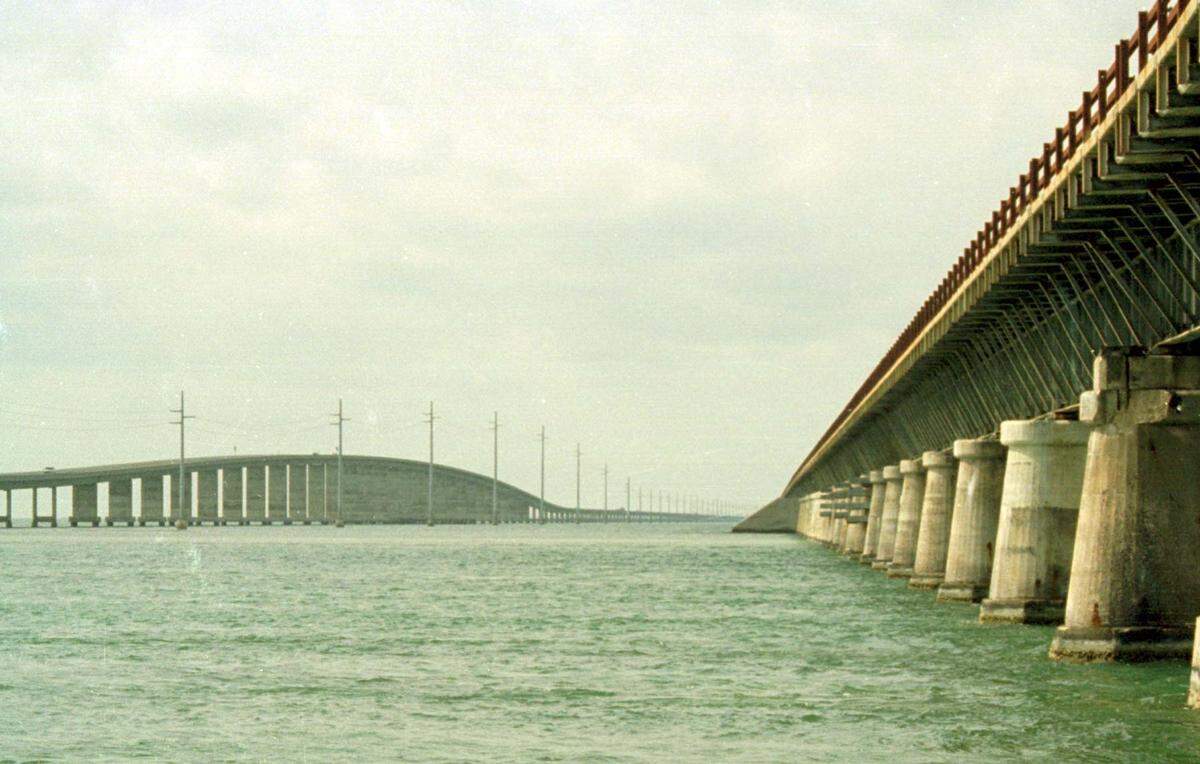
That’s when a new Seven Mile Bridge made its debut in the Florida Keys. It was smoother, wider and higher.
And ahh, that view.
Here’s a look at the new bridge’s opening told through the archives of the Miami Herald.
READY TO OPEN
Published May 21, 1982
A flaw in the design of the historic Seven Mile Bridge, scheduled to be dedicated Saturday and opened to traffic next week, has created over 50 ruptures in the bridge’s roadway, officials said Thursday.
Repairs were completed earlier this week, said Dale Schaller, deputy program manager of the Keys bridge program.
He estimated repairs cost the firm that designed the span $1,500. Engineers for the Department of Transportation said the ruptures do not affect the bridge’s structural integrity.
Saturday’s elaborate dedication will be unaffected and the span is expected to open on schedule, DOT officials said.
“It is a very slight design flaw,” said P.J. White, director of DOT’s construction division. “We were naturally very concerned when we first started noticing the cracks, but we think we’ve got the problem taken care of.”
According to DOT officials and bridge design engineers for Figg and Muller, the roadway above 56 of 256 pilings has buckled or cracked. Stress above the pilings has caused what the engineers call “delamination,” a peeling off of the upper layer of roadway.
“What we’re seeing is the top deck being squeezed,” said Mickey McCullough, Figg and Muller’s resident engineer in Marathon. “But it is a one-time problem.”
Dedication ceremonies will begin at 7 a.m. Saturday when hundreds of runners line up for the start of a race across the new bridge, which will open for traffic May 28.
The ceremonies mark completion of a $238-million construction project to upgrade the Overseas Highway and provide the Keys with a larger, more dependable fresh-water pipeline.
The project featured replacement of 37 of the 43 bridges along the highway and installation of a larger pipeline.
Dedication of the Seven Mile Bridge is scheduled for 11 a.m. on the Marathon side of the $45-million bridge. Keys residents and visitors also will celebrate with a boat parade near the bridge, a fishing tournament and a food festival at the Sunshine Key Travel Park at Mile Marker 39.
DEDICATION
Published May 22, 1982
The residents of the Florida Keys have always been survivors.
The proud islanders have been connected to mainstream America by a single, treacherous trail. They’ve been forced to get vital fresh water from a corroded pipeline. They’ve weathered hurricanes. But they’ve patiently endured.
Today, the patience pays off.
About 6,000 Keys residents and tourists are gathering in the Middle Keys to christen two astonishing feats. Today is the blessing of the new Seven Mile Bridge and mainland-to-Keys water pipeline.
It’s a celebration of progress. The new seven-mile span and water pipeline will be dedicated at 11 a.m. ceremonies on the Marathon side of the bridge. State and local dignitaries will snip ribbons and break open champagne.
“This is one of the most marvelous things that’s ever happened to the Keys,” says Monroe County Mayor George Dolezal.
The dedication of the new bridge means the retirement of the old Seven Mile Bridge. Although the old bridge has been criticized as hazardous, run-down, even deadly, its closing causes some to wax nostalgic.
“It never bothered me,” said native Key Wester Joe Pinder.
“It would be a damn shame if they tear down the old one,” says Key West native Joe Balbontin, a city commissioner.
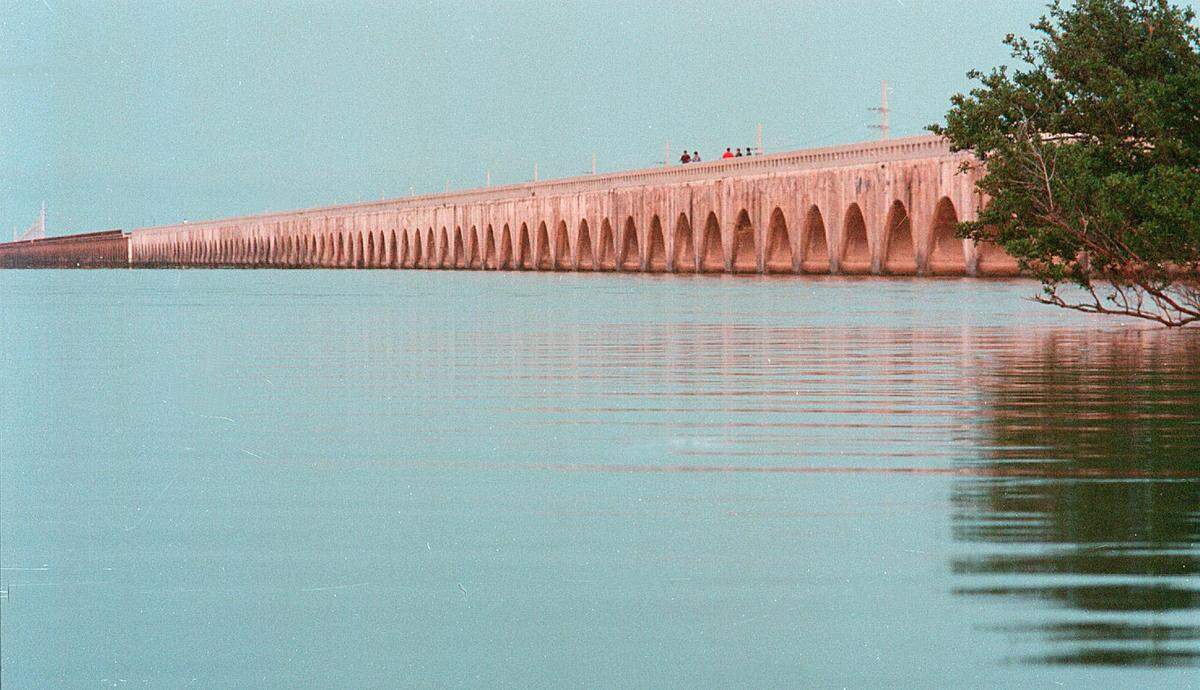
The old Seven Mile Bridge was built 71 years ago by Henry Flagler, as the longest — and most astonishing — link of his Florida East Coast Railway. Regarded as the marvel of its age, it was built from 1908 to 1911 and linked the Lower Keys to the mainland for the first time.
“I’ll always remember being a passenger on that train traveling north,” recalls Wilhelmina Harvey, a Keys native and now a Monroe County Commissioner. “I can still hear the porter call out in a high voice, ‘Seven Mile Bridge coming up.’ and everybody would leave their seats and we would hang our heads out the windows as much as we could so we could get a look at the beautiful view. It still is beautiful.”
Then came Labor Day 1935 and disaster. The strongest hurricane ever seen in the Western Hemisphere ripped through the Keys. The bridges stood, but the railway was in ruins.
“I was a school teacher then and myself and another teacher were coming back to Key West from Tulane University in New Orleans where we’d taken a course,” Harvey recalls. “When we got into the FEC depot in Miami, I asked ‘what time is the next train to Key West?’ The man said, ‘Young lady, the last train that has ever gone to Key West left a few days ago. Haven’t you heard, there’s been a hurricane.’ “
Harvey recalls learning the news that a fellow teacher and her family were thrown off the bridges into the sea and drowned when the hurricane hit. “It was a real sad day.”

The new Seven Mile Bridge is 6.79 miles long. But who would want to travel the 6.79 Mile Bridge? The Seven Mile Bridge is the heart of the state’s eight- year, $200-million program to replace 37 of the 44 bridges that connect the Florida Keys with the mainland. At a cost of $45 million, the new bridge is nearly 50 percent wider than the old bridge and eminently more safe.
Although the bridges built by Flagler took the beating of 15 hurricanes, they were beaten by modern transportation. Automobiles did the bridges in. Whether 6.79 or seven miles long, the new bridge undisputedly the longest bridge of its kind in the world.
To construct the sleek, concrete-white span, the state Department of Transportation (DOT) used a “segmental” technique designed by French engineer Jean Muller in 1962. Muller has served as a consultant on the project, which was finished in three years. That’s five months ahead of schedule. Jack Mueller, DOT’s bridge program manager, says one his fondest memories in 22 years with DOT came a couple of weeks ago.
After the last segment of the new bridge was in place, he drove the distance. An even more memorable moment comes next Friday, he says. When Mueller gives the okay, traffic at the north and south ends of the old bridge will be halted.
At Mueller’s orders, the new Seven Mile Bridge will be open for traffic.
“When I give the order, that will really be a thrill,” he said.
Not everyone thinks the dedication of the bridge and the new pipeline is wonderful.
The new water pipeline built to replace the corroded 1941 line built by the Navy was constructed at a cost of $63 million and is 98 per cent complete, according to Florida Keys Aqueduct Authority officials. Balbontin, a member of the authority board before Gov. Bob Graham ordered state control of the group, says he is insulted that the pipeline is being dedicated without him. Balbontin says he and his fellow Keys water officials, ousted by Graham, are responsible for the pipeline that is expected to end water shortages in the Keys forever.
“It’s an insult,” he said. “We did all the work. We sold the bonds. We brought the pipeline here. They the state-controlled board> just stepped in and grabbed all the glory.”
The new bridge and pipeline are being billed as a boon to tourism — the economic lifeblood of the Keys. But Bill Martin, Marathon Chamber of Commerce president, says the new bridge will also bring Keys residents closer together.
“This will bridge sectionalism,” Martin says. “It’s for all the people of the Florida Keys and the United States.” Says Harvey of the bridge dedication: “It’s a great day. After all, it’s one of the wonders of the world.”
THE OLD BRIDGE
Published June 15, 1982
An inelegant old lady, the old Seven Mile Bridge weathered a score of hurricanes, several score deaths and disasters, and a thousand minor indignities. It survived, in a word. Until now.
Workmen Monday continued removing the boxy, blue swing span that for decades allowed boaters to pass from the Atlantic to the Gulf of Mexico through the narrow Moser Channel.
“There’s a lot of sentimental attachment to the old bridge,” said Dale Schaller, a Department of Transportation engineer supervising the bridge-replacement program in the Keys. “But by the same token, there are a lot of people real glad they don’t have to drive over that thing anymore.”
The flinty old bridge that troubled ships’ captains and terrorized Keys motorists cost Henry Flagler $50 million in turn-of-the-century money.
It took 50,000 men 10 years to build it. And, once built, it withstood everything but time. With its useful life over and its gleaming sister span carrying the thousands of cars and trucks bustling to and from the Lower Keys, DOT officials last week ordered work crews to begin disassembling the swing span and the 170-ton concrete pier that supports it.
“We hope to have it all out of there by Wednesday or Thursday of this week,” Schaller said of the swing section of the bridge. “Then by the middle of next week, we should have the pier out.”
Schaller said DOT engineers had received several requests to preserve the old bridge. But a propane-gas explosion that ripped through the bridge last March, killing its tender, rendered the swing span inoperable. DOT engineers concluded that repairing it was impractical. And leaving it as is, they said, would defeat the purpose of building the new bridge, which has a maximum clearance of 65 feet at high tide.
“It just didn’t make sense,” Schaller said. “It — the bridge and pier — had to come out.”
So the bridge that would have cost roughly $8 billion to construct with 1982 dollars, that same bridge that took a full 10 years to build, is being dismantled this week.
A handful of men using two cranes, a tugboat and some acetylene torches lifted several rusting blue I-beams from the swing span Monday afternoon. The cost of the entire job is $195,531. The money was appropriated in the $45 million contract for construction of the new Seven Mile Bridge. The remainder of the bridge, which is barricaded on the Key West side, will be used as a lengthy fishing pier.
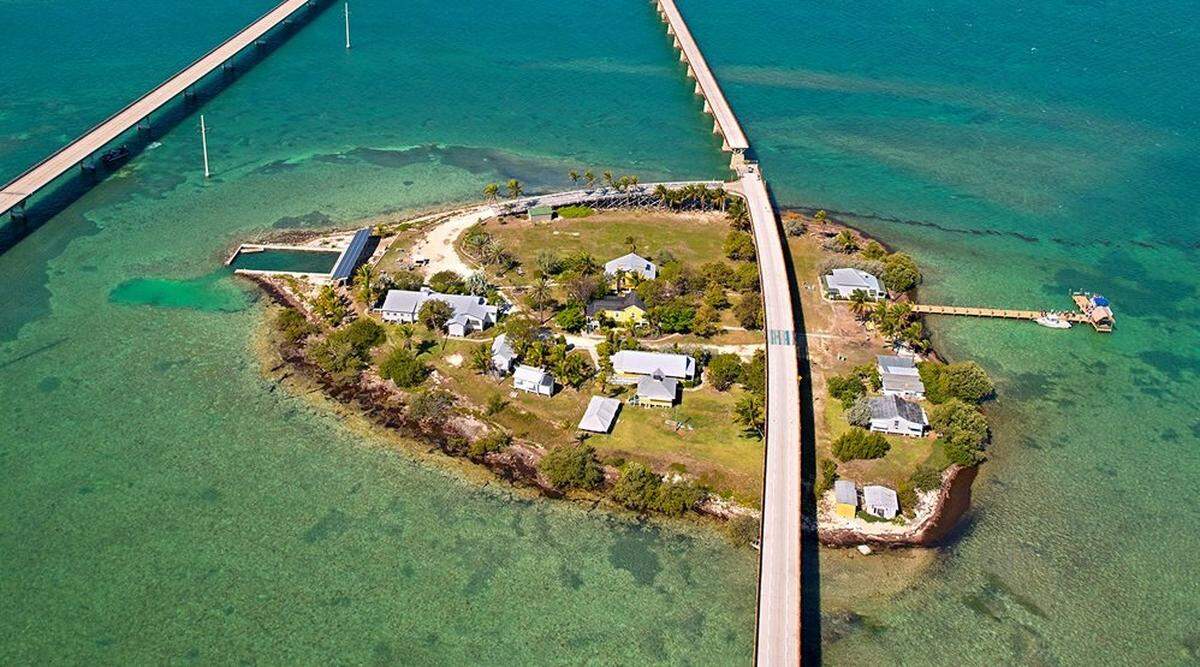
On the Marathon side, vehicles will be allowed on the bridge, but only if they have business at the University of Miami’s tiny Pigeon Key research station. Fishing will be allowed on the bridge between Marathon and Pigeon Key, DOT officials said, but those using the bridge may not drive the cars onto the bridge.
University officials have asked DOT for permission to erect a gate at the Marathon end to prevent cars and trucks from coming onto the bridge.
The structure’s narrow 20-foot width prevents many vehicles from turning around and could create a dangerous situation, they said. Permission for the gate has not yet been granted. In the meantime, the traffic whizzes by on the new bridge.
The people continue to fish on the old bridge. And the workmen continue to cut and lift and blast and saw — and remove the final ink that will convert a dangerous and inelegant old bridge into two giant fishing piers
FROM TRAIN TO CAR TO ANGLER
Published Dec. 5, 1982
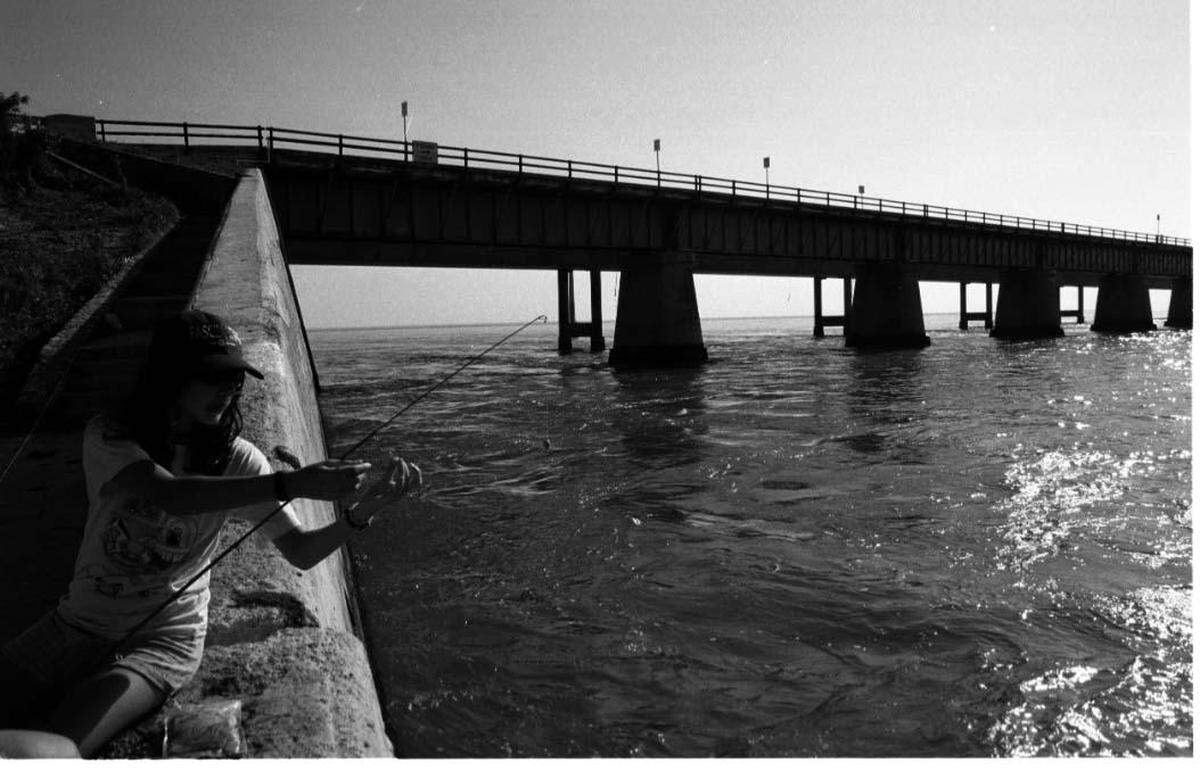
First trains, then cars and now fishermen. Each, in turn, has used majestic, island-hopping bridges that spanned the Florida Keys for nearly a century.
Once, the now-rickety bridges were part of the amazing turn- of-the-century Overseas Railroad, dubbed “Flagler’s Folly” by skeptics.
When the deadly hurricane of 1935 damaged the bridges, roadways were laid atop their trestles and they became the Overseas Highway for vehicles traveling to the Southernmost City.
Now the historic spans, which have been almost abandoned by the state, are favorite fishing spots. Thirty-seven of the 44 bridges are being replaced in a $175 million state program that’s almost complete.
“The main reason they’re still there is because we didn’t have the funds to tear ‘em down,” said John Muller, project manager of the Florida Keys Bridge Replacement Program.
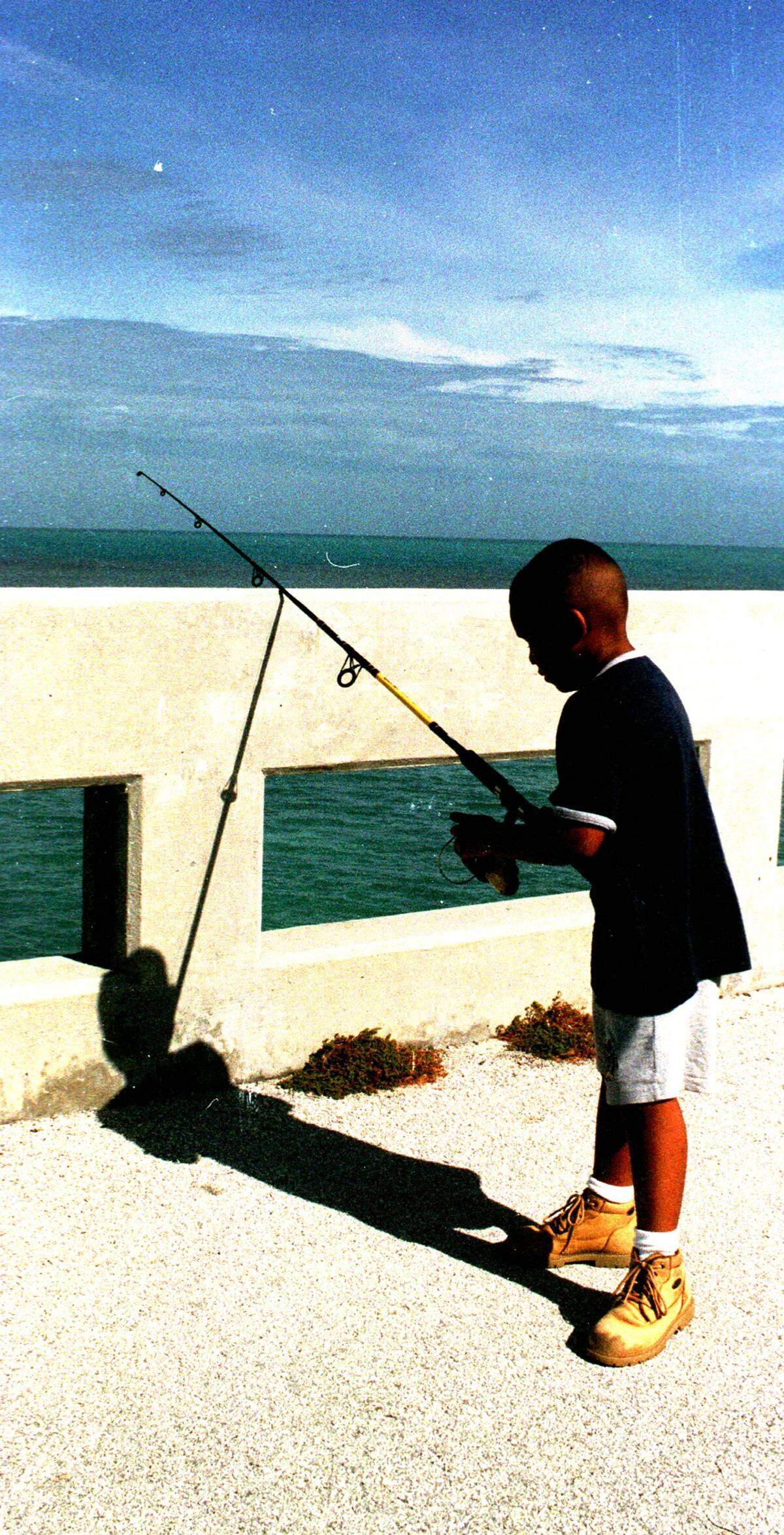
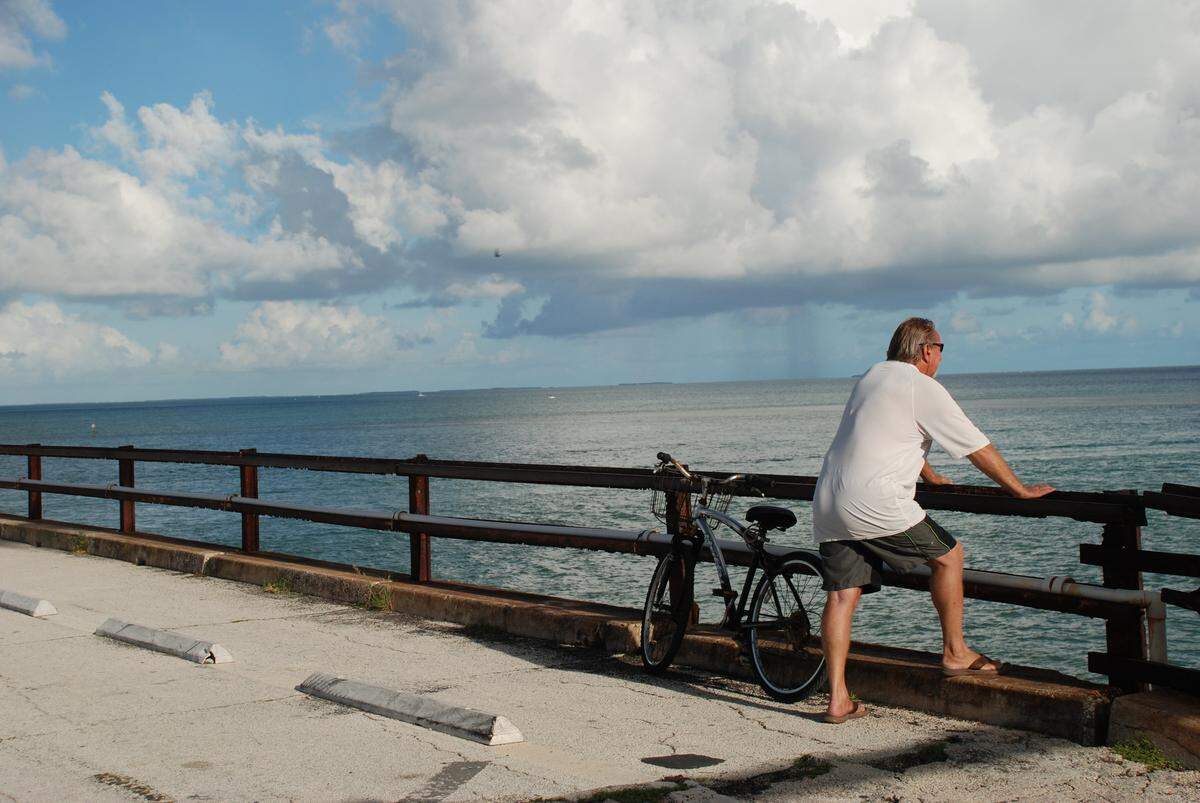
At dawn the serious anglers appear, casting their lines into the crystal waters as the sun rises in panoramic splendor. At sunset, the fishermen carry lanterns to their favorite spots. Some visitors come with folding chairs to enjoy the watery view.
One recent cloudy Sunday afternoon, Key West residents Larry Potalivo and Miguel Rioseco drove to the new bridge over the Boca Chica Channel, built on top of the old one. A special concrete strip along the northbound lanes serves as a fishing pier.
“I’d love to pull up a grouper,” Potalivo chuckles. “Keep dreaming,” Rioseco replies.
The fishermen aren’t complaining, though. Today, as on most days, they will take home 20 snappers. While Rioseco cleans the fish, Potalivo whirls a hand-held fishing line over his head as about 50 hungry seagulls dive for the bait before it disappears under the ocean.
“I like the way a hand line feels,” he explains. “You have more control. I started fishing with a rod and reel but I didn’t like it. Your fingertips are really sensitive.”
Potalivo fishes not only for the sport, but also for food.
“Mostly to eat,” he says. “When it gets bad here we’ll move on.”
For $1.25 in bait (live shrimp), Larry catches $3 or $4 worth of snapper.
“I can come up here, have fun catching fish and save money all at the same time,” he said.
Fishing under the bridge, Paul Crookshank and Bob Itterman have had less luck. Using squid for bait, they’ve caught nothing.
“Well,” sighs Paul, “this is better than sitting at home and watching television.”
Attitude, they say, is the key to this sport: They’re fishing just for fun.
“Fish for food and you end up not catching anything,” says Itterman, a two-year Key West resident.
The bridges are not just good fishing spots, they’re also historic landmarks.
Three of the old bridges — the Seven Mile, Bahia Honda and Long Key — are included in the National Register of Historic Places as federally recognized landmarks. Historic or not, the state doesn’t maintain the bridges.
“Unfortunately, they still belong to the state, but they’re no longer a part of the state road system,” Mueller said. “According to state statute, when a roadway is closed, there are no longer any funds made available to maintain them.”
As a result, some of the bridges become smelly messes when visitors don’t clean up after themselves.
The old Long Key Bridge, Muller said, is one of the worst spots.
“You’ve got to roll up your window when you go by there it smells so bad,” Muller said. “The fishermen are leaving dead fish and bait and trash all over the place.”
County officials say the bridges belong to the state. The county doesn’t want to assume the risk that would go with taking over their maintenance.
“It’s a matter of liability,” said County Adminstrator Kermit Lewin.
The state will act when transportation officials determine that the narrow old bridges, on which countless traffic deaths were blamed, become too rickety even for people.
“Eventually, it will be dangerous for people to be out on them,” Muller said. “Then we’ll just close them down or take a span out.”
MOVIE ROLE
Published Nov. 28, 1993
The biggest movie star in the Florida Keys is not Arnold Schwarzenegger. Even the muscle man of megamovies is tiny compared to this rugged celebrity, an octogenarian veteran of James Bond flicks and car commercials.
This performer has a reputation so large that Japanese tourists pay hundreds of dollars for taxis to take them for a glimpse.
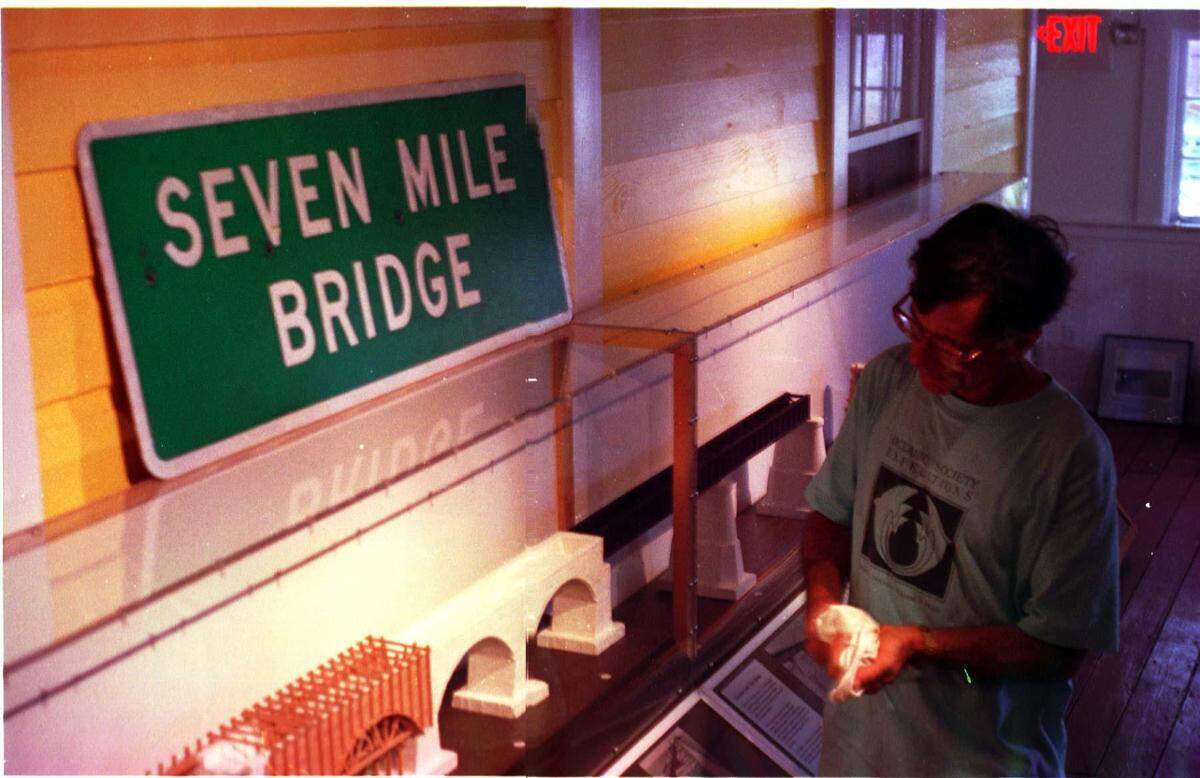
The biggest movie star in the Florida Keys is the old Seven Mile Bridge.
The span built to bring Henry Flagler’s Overseas Railway down the Keys will grab the spotlight in the final minutes of True Lies, the Schwarzenegger action movie now filming in the Keys.
And for this one, the bridge takes on a new role: explosion victim.
Even Hollywood can’t really blow a hole in the historic landmark.
Conveniently, there’s already a gap in the bridge at Moser Channel, where the swing span used to allow boats through.

In True Lies, the gap will become the work of the Harrier jets, and will appear as aftermath, complete with Hollywood —produced fake debris below.
The explosion itself will be filmed on a model off Sugarloaf. But the real bridge is the setting for a chase involving a convoy of terrorists carrying nuclear weapons, an attack from the Harrier jets, and a car-to-helicopter rescue.
It’s not the first big action scene for the bridge. In License to Kill, the bridge became an accomplice to the escape of an evil drug dealer who had just been captured by James Bond. The drug dealer was in the back of a truck that plunged off the bridge. Rescue divers were waiting in the water below to help the villain get away.
For that movie, stunt coordinators removed a piece of the old bridge’s guardrail and built a cedar simulation, said Dink Bruce, who helped coordinate the water scenes. The truck, controlled remotely, smashed through the rail and flew down 40 feet to the water.
The bridge’s fame goes back far beyond the movie roles, Bruce said.
“It’s always been a star,” he said. “If you look back at the early Flagler illustrations, it’s heavily featured as a wonder. Just the creation of it was a wonder.”
The True Lies script included a bridge scene in the Keys, and the Seven Mile Bridge was the only place with enough room.
This story was originally published April 29, 2019 at 12:31 PM with the headline "When the new Seven Mile Bridge opened, one marvel replaced another in the Florida Keys."