Miami-Dade coronavirus total surpasses 35,000. Florida reports 5,266 additional cases
Florida’s Department of Health on Monday confirmed 5,266 additional cases of COVID-19, bringing the state’s total to 146,341. Of those new cases, 1,508 were in Miami-Dade County, pushing the county to hit and surpass 35,000 for a total of 35,222 confirmed cases.
There were also 28 new deaths announced statewide, raising the death toll to 3,447.
Confirmed COVID-19 cases in South Florida
More than half of the new deaths but less than half of the new cases were in South Florida.
▪ Miami-Dade County reported 1,508 additional confirmed cases of COVID-19 and 22 new deaths. The county now has a total of 35,222 confirmed cases and 975 deaths, the highest in the state.
▪ Broward County reported 425 additional confirmed case of the disease and no new deaths. The county now has 15,045 known cases and 382 deaths.
▪ Palm Beach County saw 322 additional confirmed cases and no new deaths. The county now has a total of 13,711 and 503 deaths.
▪ Monroe County reported 17 additional cases of the disease and no new deaths. The Florida Keys now have a total of 236 confirmed cases and four deaths.
Here’s a breakdown on what you need to know:
Confirmed COVID-19 cases in Florida
One of the tools that officials are relying on to determine if the coronavirus situation is improving in the state is hospitalization data. Unlike testing, which might be limited or take days to report results, hospitalizations can help give officials a real-time snapshot of how many people are severely ill with COVID-19.
The health department says it does not “have a figure” to reflect the number of people currently hospitalized and only provides the total number of hospitalizations in its statewide and county-level data. On Monday, 110 hospitalizations were added, bringing the statewide total to 14,354.
While Florida’s Department of Health is not releasing current statewide hospitalization data to the public, hospitals in Miami-Dade are self-reporting a number of key metrics, including hospitalizations, to the county, which has made this data public. Some provide updates every day; others don’t.
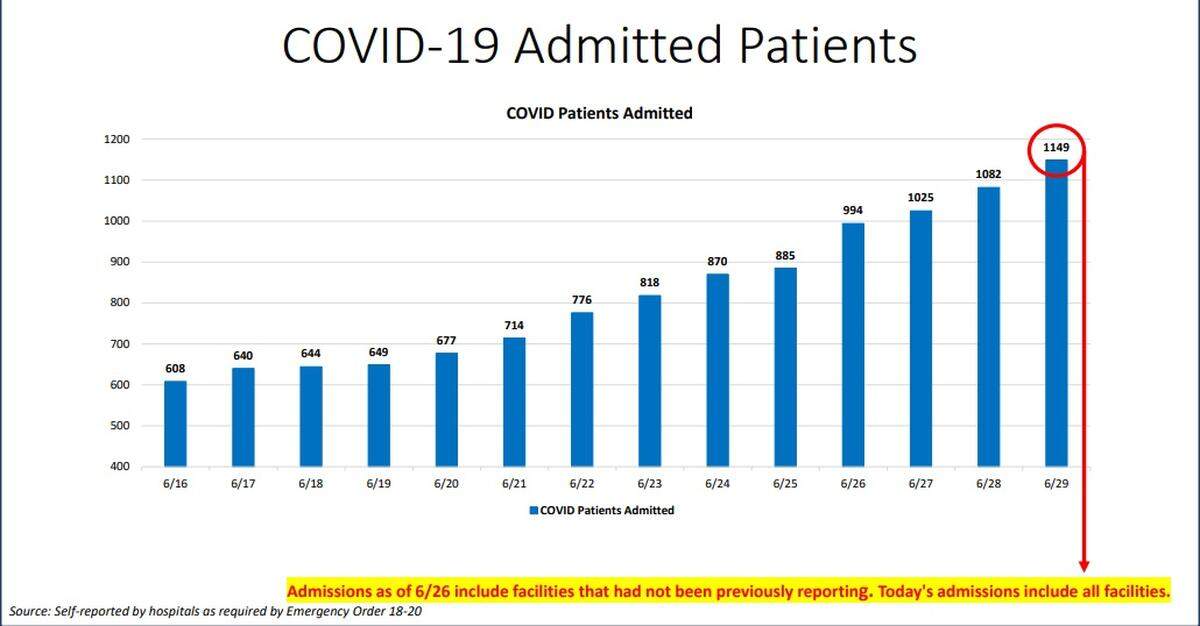
On Monday, Miami-Dade hospitalizations for COVID-19 complications hit an all-time high again with a total of 1,149 patients, according to Miami-Dade County’s “New Normal” dashboard data. According to Sunday’s data, 93 people were discharged and 117 people were admitted.
Scientists are also still working to learn more about the virus, including how many people in the community are infected and have mild or no symptoms, which can make it difficult to determine what percentage of the cases hospitalizations represent.
COVID-19 testing in Florida
Testing in Florida has seen steady growth since the COVID-19 crisis began.
Testing, like hospitalizations, helps officials determine the virus’ progress and plays a role in deciding whether it is safe to lift stay-at-home orders and loosen restrictions.
The recommended number of daily tests needed varies among experts, but the dean of the University of South Florida’s College of Medicine told the governor that Florida needs to test about 33,000 people every day.
Florida’s Department of Health reported 41,626 new tests on Sunday in Monday’s daily COVID-19 update. The positive rate was 15.71% of the total, according to the report. In total, 2,299,430 tests have been conducted.
To date, 1,914,151 people have been tested in Florida. Of the total tested, 146,341 (about 7.64%) have tested positive. The state says there are 1,744 tests with pending results. Monday’s testing data was not immediately available.
Health experts have previously told the Miami Herald that they were concerned the number of pending results listed by the state is an undercount. This is because Florida’s Health Department only announces the number of pending test results from state labs, not private ones — and private labs are completing more than 90% of state tests.
Previously, it has taken as long as two weeks for pending test results from private labs to be added into the state’s official count, making it difficult for officials to project the size and scale of the pandemic in the state. It’s unclear how quickly results are currently being sent to the state from private labs, as the turnaround time varies by lab.
This story was originally published June 29, 2020 at 10:58 AM with the headline "Miami-Dade coronavirus total surpasses 35,000. Florida reports 5,266 additional cases."