Last year, this neighborhood flooded for 92 days. Residents fear they’re in for a replay
The Stillwright Point subdivision in Key Largo was constructed decades ago on the Florida Bay by building fill over top of mangroves.
Every fall, very high tides known as king tides cause the streets of the low-lying neighborhood of middle-class to luxury homes to flood, usually for days to a week.
But in recent years, the standing saltwater — more than a foot in some spots — has lasted much longer. Last fall, residents of the 215-home community were basically held hostage to the car-corroding floods for more than 90 days.
As of Thursday, residents say some streets in the neighborhood have been flooded for going on 26 days. They fear they could be in for another long fall stuck in their homes, save for those who have high-wheeled pickup trucks and Jeeps.
“You can’t see it,” said resident Jan Darden. “It just comes up from the ground.”
Darden lives with her husband on Center Lane, one of several streets in the neighborhood with a canal running behind it. Fortunately, not many of the lots, including Darden’s, have seawater in them, because most are elevated far above the water level.
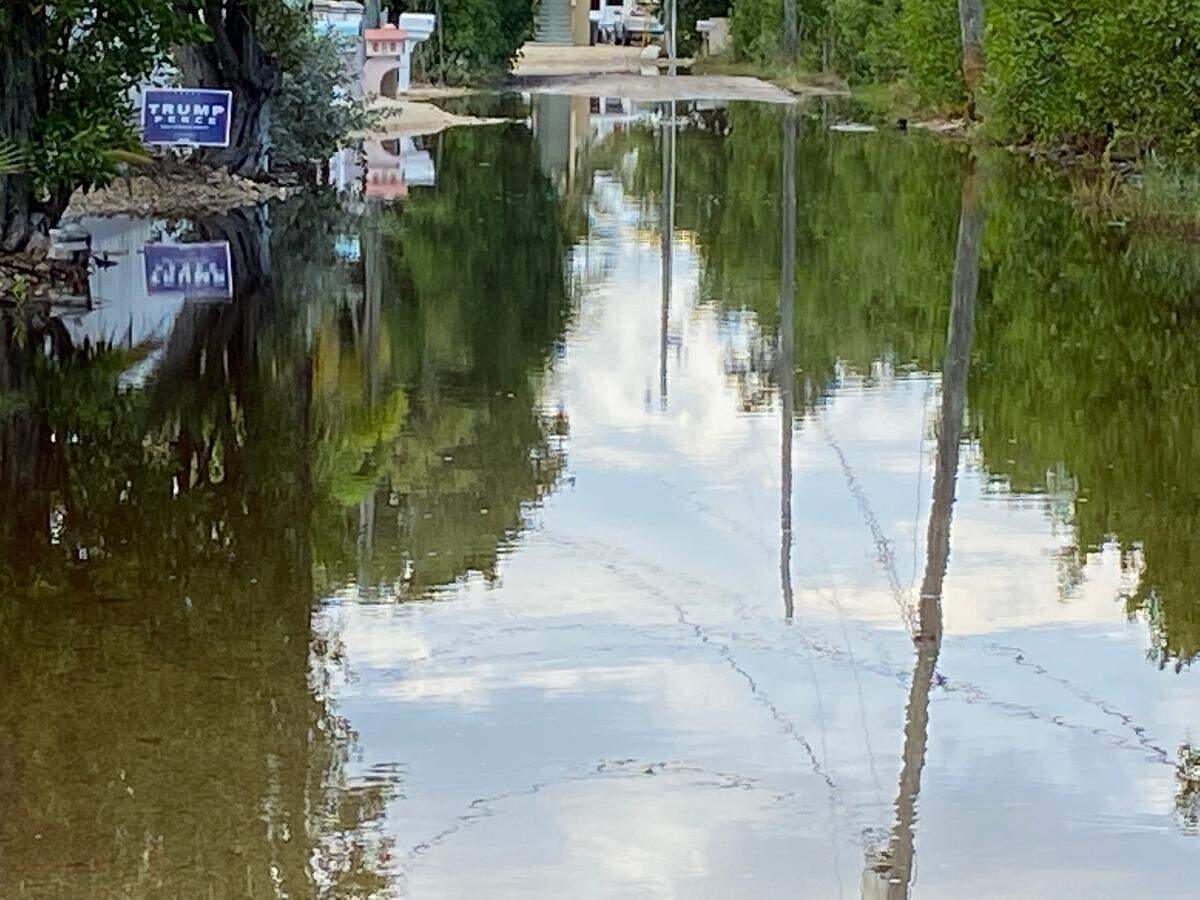
But, streets of Center Lane were so flooded this week that residents hung “no wake” signs up so drivers don’t speed through and cause water to splash onto cars parked in driveways. The signs were up last year as well. The water either gets on the roads from the bay through lower-lying lots or bubbles up through the porous fill underneath the pavement.
As in previous years, people in the tightly-knit neighborhood are helping each other out. Those with Jeeps and pickups are going to the store for those with sedans, which would rot if driven through the saltwater. Luckily, Winn Dixie is less than a mile up the road.
“This neighborhood has many Jeep owners compliments of this,” said Emilie Stewart, who lives on North Blackwater Lane.
Neighbors are also going to the stores for neighbors and taking them to appointments and to get prescriptions filled.
“People can’t even walk their dogs,” one neighbor, who did not want to be identified, said. The reason she, and others, requested anonymity is because they don’t want to upset Monroe County officials, who are weighing options to allow streets in Stillwright Point to be raised.
One avenue is a $21-million federal grant from the Department of Housing and Urban Development that would pay for a street-raising project in the neighborhood. The county is in the process of applying for the grant through the state’s Department of Economic Opportunity.
If the grant is rejected, however, the residents may have to foot the bill, and that may be done through making the neighborhood a special taxing district and levying a yearly assessment on homeowners.
Stillwright is one of dozens of areas in the Keys that the county is considering for road elevation due to the threat of sea level rise and climate change. County officials estimate elevating just half of the Keys’ 300-plus miles of roadways would cost billions of dollars, leaving them to consider abandoning some areas rather than paying such a steep price.
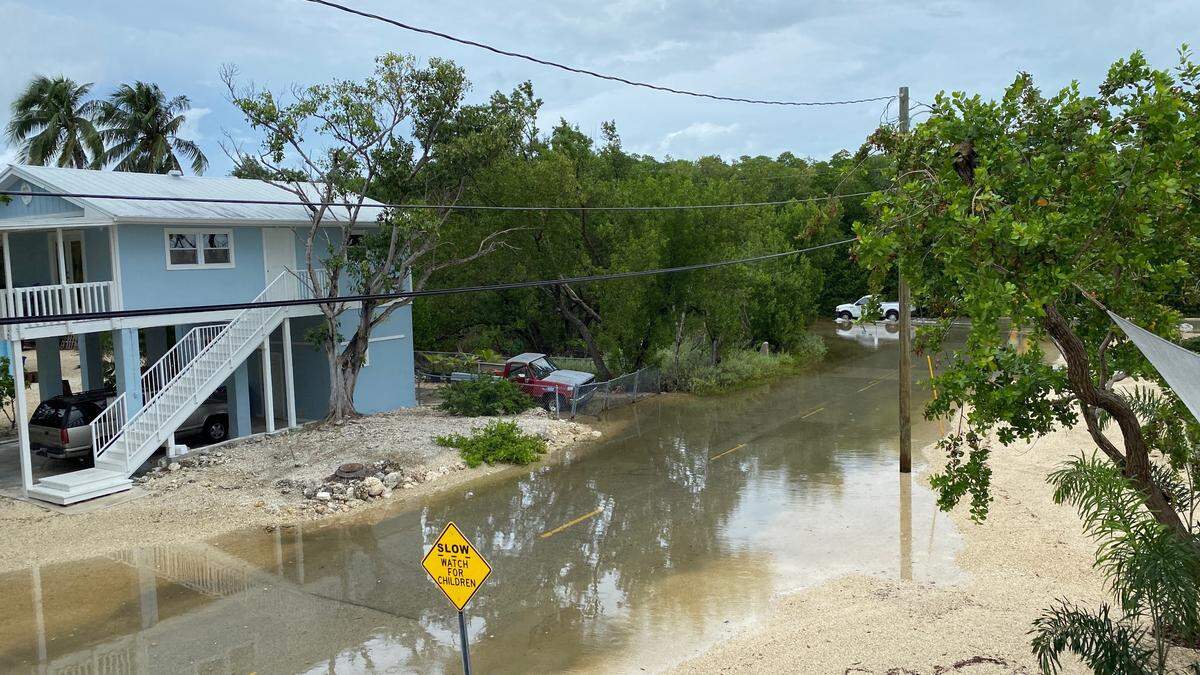
Stillwright residents are angry with the county because they think the growing flood problem in their neighborhood has more to do with the roads being improperly rebuilt after the county installed its centralized sewer system earlier in the decade than it does with sea level rise.
The Keys were under state mandate to sewer the entire island chain by 2015, and Stillwright Point residents say that’s about the time the floods began hanging on for longer periods of time. They said that after the roads were dug up and the pipes installed, the streets were not built back to the same height and they were improperly repaved in some areas.
“They created much of the problem, and now they want us to pay to correct their mistakes,” said George Smyth, who owns two homes in Stillwright Point.
Smyth and his neighbors also say the price tag is too high for the proposed project, noting a similarly-built nearby subdivision, Twin Lakes, was done for $7.1 million.
“Our neighborhood is really not different from Twin Lakes, and it’s triple the costs,” Smyth said Thursday.
Rhonda Haag, Monroe County’s chief resilience officer, said the reason for the difference in costs for both projects is “technical in nature.” She said Friday afternoon that she was trying to get more specifics from the county engineering department, but that information was not immediately provided.
Haag said her department was researching the idea of the special taxing district and is expected to report to the five-member elected board of county commission on her findings in November.
The woman who did not want to be named said the special taxing district proposal angers her. She said that she’s lived in Stillwright Point for 34 years, and in that time has paid about $272,000 in property taxes.
“I’m paying property taxes for 34 years and you’re going to tell me I have to pay to raise my roads,” she said.
In the meantime, the application for the grant is due this month, and Smyth fears the federal government won’t see enough cost/benefit ratio to approve it.
“When these grant moneys are gone, the moneys are gone,” he said.
Last year, the water hung around for so long because three tropical storms were hanging around in the Atlantic that caused massive amounts of ocean from the Gulf Stream to back up into Florida Bay.
Sean Daida, meteorologist with the National Weather Service in Key West, said it’s too soon to tell how long the flooding will last this year, but residents should not anticipate immediate relief. For one, South Florida is in the midst of its rainy season.
And, although there aren’t any tropical systems in the Atlantic, strong gales off the East Coast up through New Jersey are still backing up water from the Gulf Stream into the bay again. There is also both a tropical wave that formed below Hispaniola and a tropical depression off Central America that are expected to bring heavy rains up through South Florida in the coming days, which will likely contribute to flooding in prone areas, Daida said.
“There are multiple factors contributing to why our weather is so wet,” he said.
This story was originally published October 3, 2020 at 10:30 AM with the headline "Last year, this neighborhood flooded for 92 days. Residents fear they’re in for a replay."