Endangered baby right whale washes up on Florida beach. A ship may be to blame
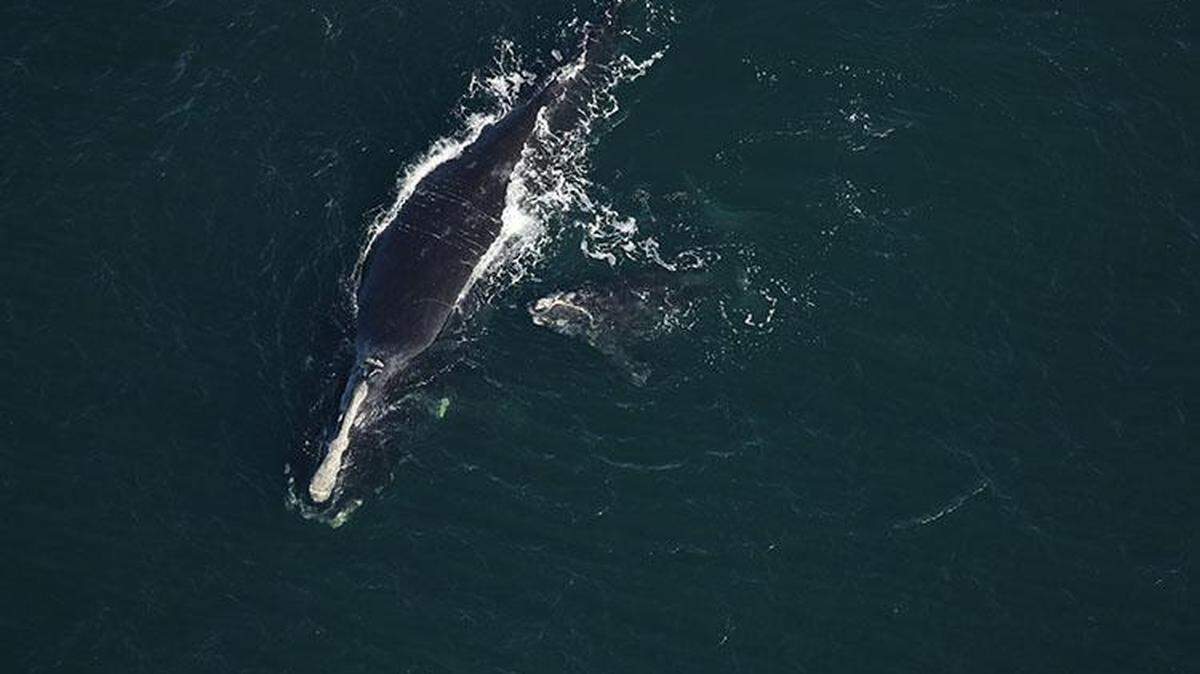
A North Atlantic right whale calf was found dead on a northern Florida beach Saturday.
The male mammal, which was about 22 feet long, appeared to have been hit by a ship, according to the National Oceanic and Atmospheric Administration’s Fisheries Service.
Its body was found along the shore of Anastasia State Park in Saint Augustine, said NOAA Fisheries spokeswoman Allison Garrett.
North Atlantic right whales are critically endangered, with fewer than 400 believed to be living. The coastal ocean waters off northeast Florida, Georgia and South Carolina are their only known birthing grounds. After giving birth, mothers and their calves typically swim north to New England.
Occasionally, they head south instead, which happened earlier this month when a mother and calf were spotted deep into South Florida near the Lake Worth Inlet just north of West Palm Beach. Scientists were relieved when the pair was seen off Jacksonville just a few days later, appearing to be on the correct course.
NOAA biologists believe the dead calf is the offspring of a 19-year-old female scientists named Infinity. The calf was first seen on Jan. 17 off the coast of Amelia Island.
Right whales can live up to 70 years old. They can grow as long as 52 feet and weigh upwards of 140,000 pounds.
The deceased calf found over the weekend is the first confirmed right whale death in U.S. waters in 2021. Before this weekend, the last known right whale fatality was in North Carolina in November 2020, according to NOAA Fisheries.
Since 2017, scientists have confirmed 33 right whales have died in U.S. and Canadian waters, and 14 have been seriously injured, prompting NOAA Fisheries to declare an “Unusual Mortality Event,” defined by the agency as “a stranding event that is unexpected, involves a significant die-off of any marine mammal population, and demands immediate response.”
North Atlantic right whales tend to swim slowly, which made them easy prey for whalers before hunting them was made illegal in 1935.
Now, large ships pose the most danger to the federally protected species. Large vessels traveling at normal speeds can’t maneuver to avoid hitting them, according to the conservation group Oceana.
The second-leading cause of injury or death are vertical lobster and crab trap ropes found in abundance along the whales’ migration routes.
An emerging threat, according to Oceana, is seismic air gun blasting, which is used by energy companies to find deep-water oil and natural gas supplies beneath the ocean floor.
This story was originally published February 16, 2021 at 5:00 AM with the headline "Endangered baby right whale washes up on Florida beach. A ship may be to blame."